Temple Bronze
& Brassware
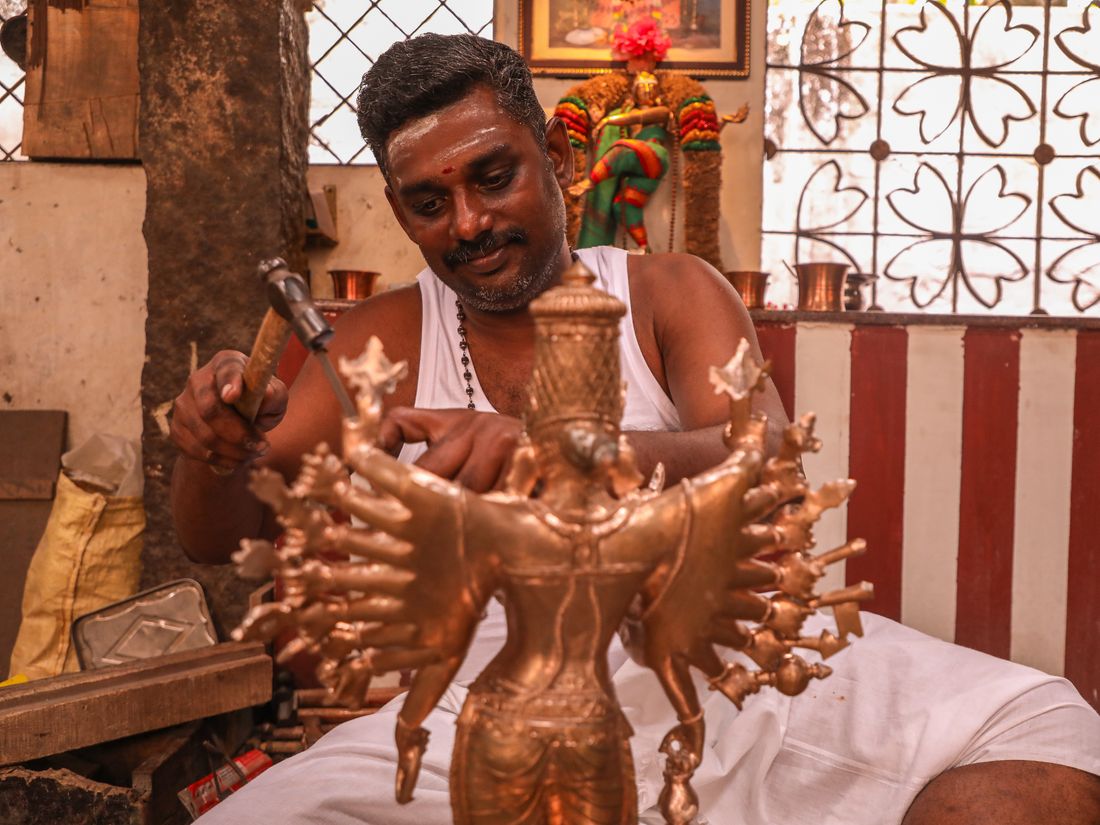
Thanjavur icons, Kerala bronze lamps, the Aranmula metal mirror and Moradabad brassware — the decorative metal lines that carry the most weight, literally and commercially.
What we buy in this line
- Thanjavur metal iconsLost-wax cast bronze figures in the Chola idiom.
- Kerala bronze lampsStanding, hanging and multi-tier oil lamps.
- Aranmula KannadiThe speculum-metal mirror, made by one protected community.
- Moradabad brasswareSpun, cast and sheet brass at production volumes.
- Architectural metalDoor furniture, panels, handles and fittings.
- Tableware and objectsTrays, urlis, planters, bowls and serveware.
What we fix before the first pour
Hand-made goods are bought against an approved sample, not a drawing. That only works if what the sample is being judged on is written down before anyone starts.
Every criterion above appears in the inspection report as a pass or a fail, with the measurement beside it. Where a criterion is a judgement rather than a number, the judgement is recorded against a retained physical sample.
What we screen before a sample is quoted
Lead in alloy
Decorative brass frequently carries lead. Anything food-contact or intended for children is tested, not asserted.
Foundry safety
Molten metal handled with minimal protection is common in small units and is an audit finding.
Weight and landed cost
Under-stated piece weight quietly destroys the landed cost. Weights are verified rather than taken from the quotation.
Aranmula authenticity
Aranmula Kannadi is GI-protected and made by very few families. Nickel-plated glass imitations are widespread.
Clusters we work for this line
These are temple-metal towns with centuries of continuity and very small output. Moradabad is the only one of them that behaves like a production cluster.
The other hand-made skills
Send us the sample. We will tell you honestly.
Whether we can source it well in India, what it should cost, and what could go wrong — before you commit to anything.